The Linen Showplace | Home & Textiles
How to Evaluate Bath Towels: Absorbency, Weight, and Everyday Care
A towel can feel wonderfully plush on the shelf and still disappoint after a shower if it takes forever to dry or barely absorbs water. The better choice balances feel, performance, drying time, and the care you can realistically give it.
Published October 16, 2026
Few home essentials get such a close-up audition as a bath towel. It is wrapped around damp skin, reached for in a hurry, and washed again and again. That makes shopping for one less about chasing a single impressive specification and more about finding a dependable match for your bathroom, laundry routine, and personal preference. Absorbency matters, but so do the fabric, weave, weight, construction, and the time it takes to dry between uses.
The good news: you do not need to be a textile expert to compare options thoughtfully. A handful of details can tell you a lot about what a towel may feel like and how it could behave at home. Think beyond “soft” and ask a few practical questions: Does the towel have a useful looped or textured surface? Is its weight suited to your climate and drying setup? Will its washing instructions fit your routine? And is the fabric one you actually enjoy using?
Start with the job you need the towel to do
A bath towel used after every shower has different demands from a hand towel beside a sink or a guest towel brought out occasionally. Before comparing labels, consider where the towel will live and how often it will be used. In a busy household, quick turnover and easy laundering may matter more than an especially lofty feel. In a small bathroom with limited ventilation, a towel that dries efficiently can be a better everyday companion than a heavier one.
It also helps to separate towels by purpose. A generously sized bath towel offers more coverage; a bath sheet provides an even larger wrap but takes up more room in the wash and on the drying rack. Hand towels and washcloths are smaller and often laundered frequently. Choosing a size that suits your routine is a simple way to make a set more useful, rather than buying by appearance alone.
Absorbency: the feature you feel immediately
Absorbency is a towel’s ability to take moisture from skin. Fiber content and construction both contribute. Cotton terry towels, for example, use loops that create a large surface area to catch and hold water. A textured weave can also perform differently from a dense, smooth surface. Linen towels are often made in lighter constructions, including waffle weaves, where the raised pattern gives the fabric texture and creates spaces that can aid airflow.
The word “absorbent” on a product page is a starting point, not a complete comparison. Look for clear material and construction details, and consider whether the towel’s design suits your expectations. If you prefer a substantial, enveloping towel, a plush terry style may feel familiar. If you would rather have a lighter towel with a more textured hand, a waffle weave could be appealing. Neither is automatically the better choice; the right one depends on how you like to dry off and how quickly you want laundry to be ready for its next turn.
What towel weight can—and cannot—tell you
Towel weight is commonly described in grams per square metre, or GSM. In broad terms, a higher GSM often points to a denser, plusher towel, while a lower GSM may indicate a lighter fabric. That shorthand can be useful when comparing towels made in similar ways, but it is not a complete verdict on comfort or performance. Fiber, yarn, weave, finishing, and loop height all shape the experience.
A heavier towel may feel luxurious and absorb plenty, yet it can also take longer to dry. That trade-off is important in a humid bathroom, a compact apartment, or a household with a small laundry load and limited drying space. A lighter towel may be easier to hang and turn around quickly, but someone who loves a thick, cushioned wrap may find it less indulgent.
Treat weight as one clue among several. If a product listing gives GSM, use it to compare similar towels—not as a universal scorecard. If it does not, do not assume the towel is poor quality. Instead, look for a clear description of the fiber, weave, dimensions, care instructions, and intended feel. Those details make a more useful picture than a number in isolation.
Fiber and weave: two details worth checking
Fiber is the raw material; weave or construction describes how the yarns are arranged. Together, they help explain why two towels with similar dimensions can feel quite different. Cotton is a familiar choice for bath towels, especially in looped terry construction. Linen offers a different character: it can feel more textured and less conventionally fluffy, and its performance depends on how it has been woven and finished.
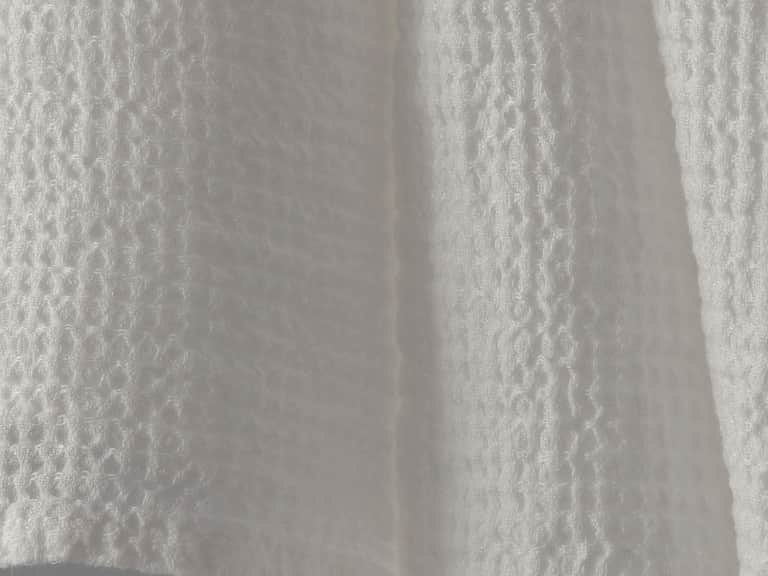
A useful example is the Lipe New Towel Set from Society Limonta. It is described as pure linen in a traditional waffle weave, with a light, three-dimensional texture. That combination may suit someone looking for a textured alternative to a thick terry towel. Its listing also describes a gentle scrub-like feel. The detail to notice is the actual construction—not just the general promise of softness or absorbency.
Softness is personal—and can change with use
A towel’s first-touch softness is appealing, but it should not be the only test. Finishes can influence how a towel feels straight out of the package, and washing may change its hand over time. Some towels become more comfortable after a few proper washes; others may lose their pleasing feel if they are coated with detergent residue or fabric softener. A towel that is slightly less plush but dries well and remains pleasant in regular use can prove more satisfying in the long run.
If you are sensitive to texture, consider the surface as carefully as the product description. A looped terry towel, a flat woven towel, and a waffle towel do not provide the same sensation against skin. There is no need to choose the towel that sounds most luxurious if you would rather have a lighter, more tactile finish. Comfort is about what feels good to you, not a marketing adjective.
Drying time matters more than many shoppers expect
A towel does not finish its job when you leave the bathroom. It needs to dry before its next use, and that process depends on both the textile and its surroundings. A thick towel may hold more water and take longer to dry. A lighter or more open construction may dry more readily, but ventilation, humidity, how it is hung, and how crowded the rail is all make a difference.
If your bathroom stays damp, choose a towel you can spread out fully rather than folding over a narrow hook. Leave space between towels, use an exhaust fan when available, and avoid leaving a damp towel bunched on a bed or floor. These small habits can improve drying and help prevent stale odors. When considering a new towel, imagine where it will hang as well as how it will feel when you first unwrap it.
Everyday care: follow the label, then keep it simple
Good towel care begins with the manufacturer’s instructions. Temperature, detergent, and drying guidance can vary by fiber, finish, and construction, so the care label should take priority over generic rules. In general, avoid overloading the washing machine: towels need room to move and rinse properly. Use an appropriate amount of detergent, since too much can leave residue that affects feel and absorbency.
Fabric softener can also leave a coating on towel fibers, which may reduce their ability to take up water over time. If absorbency seems to fade, consider whether detergent or softener buildup could be contributing before deciding the towel has reached the end of its useful life. Wash towels with similar colors and care needs, and do not use bleach unless the label specifically permits it.
Dry towels thoroughly, but avoid excessive heat or over-drying when the care instructions recommend gentler treatment. A line or rack can be a practical option if you have good airflow; a tumble dryer may suit other homes and towel types. The aim is not to follow an elaborate ritual. It is to use the care method that protects the fabric while fitting your actual week.
A quick checklist for comparing bath towels
When product descriptions start to blur together, use this short list to bring the decision back to everyday needs:
- Fiber: Is the material clearly identified, and do you like its feel and care requirements?
- Construction: Is it terry, waffle, or another weave, and does that texture suit your preference?
- Weight: Is the towel likely to feel light or substantial, and will that work with your drying space?
- Size: Does it provide the coverage you want without making laundry more cumbersome?
- Care: Can you follow the washing and drying instructions consistently?
- Use: Is it for daily showers, occasional guests, the gym, or another specific purpose?
This checklist can also help you compare towels from established home-textile brands, including Sferra, when you find a specific towel listing with its own material, construction, and care details. Assess the item in front of you rather than assuming that a brand name, price, or “luxury” description guarantees a particular weight or absorbency.
Common towel-shopping assumptions to leave behind
“Heavier always means better.” Not necessarily. More weight may bring a plush feel, but it can also mean longer drying time. The best balance depends on your preferences and bathroom conditions.
“Softest in the store means best after washing.” Initial softness is only one moment in a towel’s life. Construction, washing habits, and drying conditions affect how it performs over time.
“All natural fibers feel the same.” They do not. Fiber type, yarn, weave, and finishing create distinct textures. Read the specifications and choose for the sensation you want.
“A towel that dries slowly must be more absorbent.” Drying speed and absorbency are related to the fabric’s properties, but one does not prove the other. A slow-drying towel can be inconvenient even if it feels substantial, while a lighter towel may suit a quick-turnaround routine.
The best towel is the one that works in your home
A comfortable bath towel does not have to win every category. It should absorb well enough for your routine, feel agreeable against skin, dry at a reasonable pace, and withstand the care you can provide. For one household, that may mean plush cotton terry. For another, a textured linen waffle towel may offer the lighter feel and distinctive surface they prefer.
Look past the first touch and consider the whole cycle: shower, use, hanging, washing, and drying. When fiber, weight, construction, and care instructions all make sense together, choosing becomes less of a guessing game. That is the kind of everyday luxury worth bringing home: a towel that feels good today and remains practical long after the first wash.